
Make an item of test equipment that can respond to SCPI (IEEE-488.1) commands. including *IDN?, *OPT? and *TST
Post
47 posts

To encode the Hardware Revision number, so that we know what the version numbers of the main PCB is and is available to the Microcontroller.

we use the "ArduinoUniqueID" Arduino library, to give us the Unique ID serial number of the Arduino we are using.

KL15, KL30, KL31, KL61 - KL is the abbreviation for 'klemme' which is the German term for connector/connection…

It is helpful to know when the firmware on the device was compiled, it can be displayed on a screen, or sent viewed over serial.
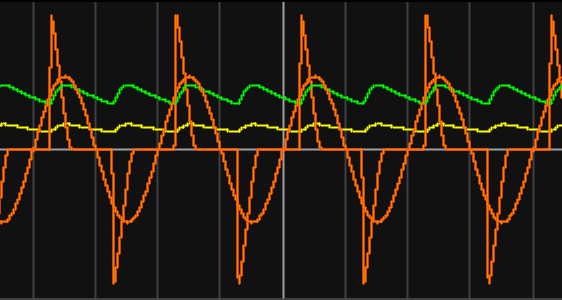
After AC Rectification, the next step is Reducing the Ripple on the DC supply line as much as possible.

AC (Alternating Current) is used for the transmission of mains voltage, one of its main advantages for use as a method of transmission over DC (Direct Current) is that a change of voltage between High Voltage, Low Voltage, and SELV (Safety Extra-low Voltage) can be performed using a transformer. A […]

For the Charging Two EVs on One EVSE project, I will need a Vehicle Inlet ‘Male’ type EV charging connector for the upstream supply from the existing EVSE. And two EVSE ‘Female’ type EV connectors to allow for connection to the downstream vehicles, Since we are in the UK I […]

An EV emulator or EVSE test box is a device that you can use to test EVSE equipment. it allows you to change between different charge states and cable configurations. It will also allow you to draw current from EVSE equipment, as well as offering through normal valid states, An […]

One of the standard tests for EMC testing is ESD Testing, It is one of the tests worth doing first, so if you fail this test, you haven’t spent all that much time or money on testing. In most cases, you will be looking at “IEC 61000-4-2: Electromagnetic compatibility (EMC) […]

If I were to advise someone just starting in the field of EMC today, the advice I would give them would depend on what field they wanted to go into and their background. I didn’t plan to go into EMC testing or Engineering. I started at CASS Industries in 2014 […]

When I was working for ARRIVAL, setting up the Automotive EMC lab there, I needed an ISO 10605 Annex F island as part of the ESD test setup. This test setup is as far as I am aware unique to Automotive, and as such commercial EMC Technicians and Engineers are […]